Who Holds the System Together? Care, Character, and the Moral Load of Junior Sport

Who Holds the System Together? Care, Character, and the Moral Load of Junior Sport

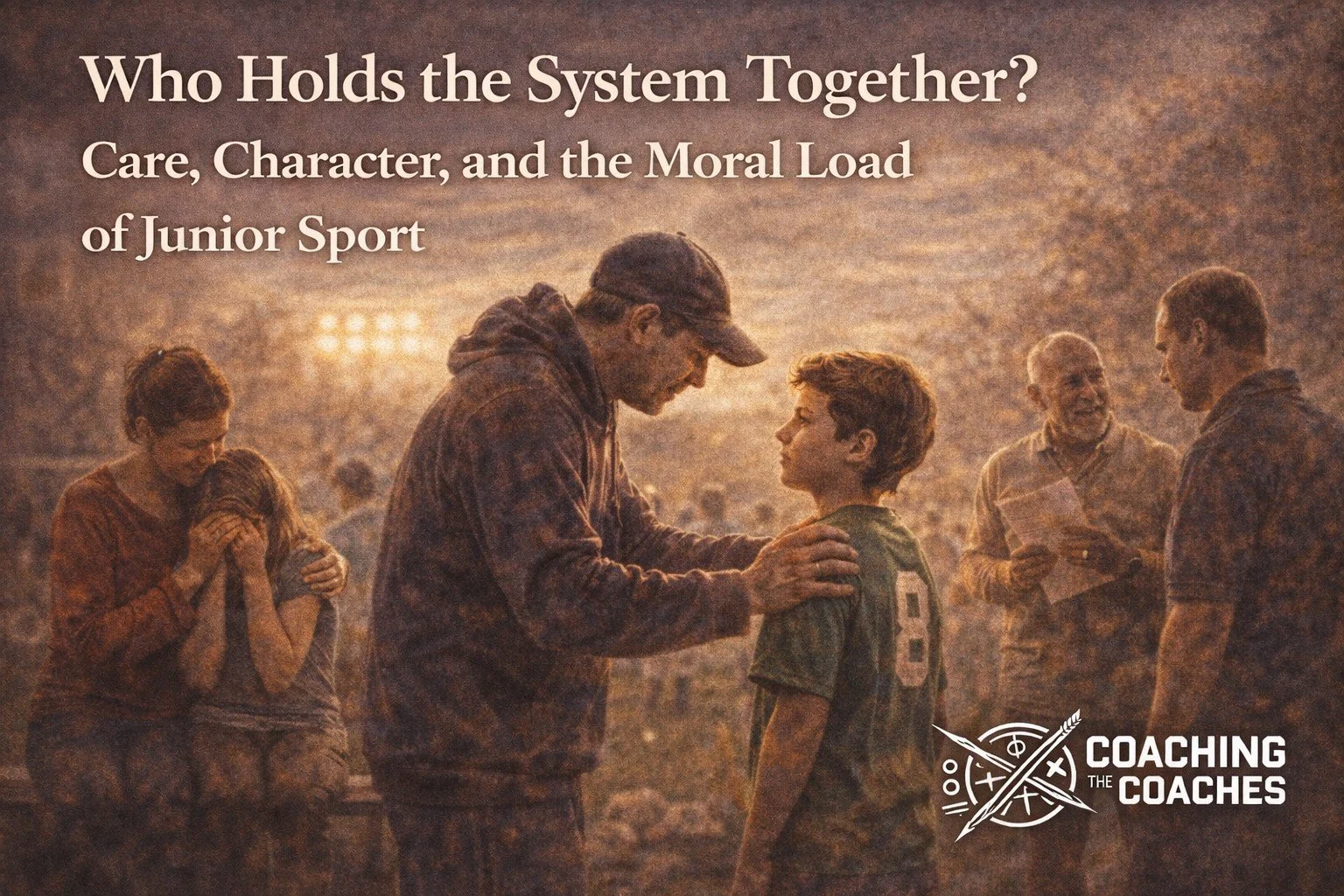
Junior sport often presents itself as a system of rules, pathways, and policies....but in practice, it is held together by people quietly doing moral work. Volunteer coaches, parents, administrators, and mentors absorb emotional labour, manage conflict, protect values, and buffer young athletes from the sharp edges of performance culture. This care work is rarely recognised, yet it shapes how safe, meaningful, and human sport feels for those growing up inside it.

This long-form piece explores junior sport as a moral ecosystem, asking who carries the burden of care when systems prioritise outcomes over relationships. Drawing on sport sociology, moral psychology, and youth development research, it examines how character is shaped not by slogans or codes of conduct, but through everyday decisions about attention, fairness, belonging, and restraint....and what happens when that moral load becomes unsustainable.

Read More

From Pathways to Pressures: How Modern Junior Sport Reshapes Identity

From Pathways to Pressures: How Modern Junior Sport Reshapes Identity

Junior sport has always shaped identity, but modern systems have intensified how….and how early…that shaping occurs. Pathways, rankings, early selection, and constant visibility promise clarity and opportunity, yet they also compress adolescence into performance categories before identity has time to breathe. When development is organised around certainty and projection, young athletes are not just learning how to play; they are learning who they are allowed to be.

This long-form piece explores how pathway culture, digital surveillance, and outcome-driven systems reshape motivation, belonging, and self-concept in junior sport. Drawing on sport sociology, developmental psychology, and motivation research, it asks a simple but uncomfortable question: if pressure now structures the environment, what kind of identities are being formed inside it….and at what cost to long-term engagement, wellbeing, and meaning?

Read More

Rebuilding the Village: Why Youth Sport Has Become One of Our Last Social Institutions....and Why That Matters

Rebuilding the Village: Why Youth Sport Has Become One of Our Last Social Institutions....and Why That Matters

Youth sport was never just about skill development. For decades, it functioned as a village — a place where young people were known, supported, corrected, and shaped by more than one adult voice. As other community institutions have weakened, sport has quietly inherited this role. The question is no longer whether youth sport carries social responsibility, but whether it has been designed to carry it well.

Read More

The Developmental Cost of Certainty: Why Youth Sport Keeps Choosing Early Selection Over Long-Term Development

The Developmental Cost of Certainty: Why Youth Sport Keeps Choosing Early Selection Over Long-Term Development

For some athletes, early selection brings opportunity. For many others, it reshapes identity, belonging, and motivation long before they are developmentally ready. Youth sport’s pursuit of certainty often compresses adolescence into performance categories, rewarding what is visible now while overlooking what could emerge later. This piece asks a simple question: if development is the goal, why do our systems struggle so deeply with uncertainty?

Read More

Youth Sport as a Social Institution: Why Junior Sport Now Carries More Than It Was Ever Designed To

Youth Sport as a Social Institution: Why Junior Sport Now Carries More Than It Was Ever Designed To

Youth sport is often discussed in terms of participation rates, pathways, or performance outcomes. Yet these frames miss something more fundamental. In contemporary society, junior sport has become one of the last remaining institutions where young people regularly experience belonging, shared identity, adult mentorship, and face-to-face community. It is no longer simply an activity system; it is a social institution.

This article reframes youth sport through a sociological lens, arguing that it now carries responsibilities once distributed across families, neighbourhoods, and communities. Drawing on sport sociology, adolescent development, motivation psychology, and recent research, it explores how junior sport shapes identity, belonging, and meaning…..often unintentionally… and why recognising this role is critical if sport is to remain humane, effective, and developmentally sound.

Read More